
Tuesday, May 10, 2011

Monday, March 28, 2011
Pictures and Recipes from my cooking class!
Happy Monday and start to the week everyone!
I have been very busy with my cooking class and wanted to share pictures and recipes. The students have been working hard and we have been eating well every Thursday! This past Thursday, we made Sabaayad and Spinach. If you want to see some pictures, check out my Facebook Page: http://www.facebook.com/album.php?id=116590851695977&aid=48419#!/album.php?fbid=201478726540522&id=116590851695977&aid=48419
Sabaayad/Burkaaki
You can eat the sabaayad with honey and olive oil, and tea with milk (for breakfast). You can also eat it with chicken sauce, goat meat sauce or lamb meat sauce (for lunch or dinner)
1 1/3 cup of lukewarm water
4 cups of flour
4 tablespoons of unsalted melted butter
 3 tablespoons of unsalted butter for brushing on the dough during flattening
Salt to taste
Combine all the water, flour and 4 tablespoon melted butter in a large bowl. Mix them together with your hand, and knead until dough is formed (or make the dough in a bread maker). Place the dough on a lightly floured breadboard and knead for 10-15 minutes. Cover with damp cloth or a plastic wrap and let stand for 1 to 2 hours.
Divide the dough into 10 pieces and flatten each with lightly floured fingers. Continue flattening with a rolling pin until each piece is 7-8 inches in diameter. Brush with ½ a teaspoon butter then fold the four sides inside and put aside until you finish all the dough. Starting with the first one, begin flattening with a rolling pin again until each piece is about 7-8 inches in diameter.
Heat a skillet over medium heat. When the skillet is hot, oil the skillet, and place one sabaayad on the skillet. Let it cook for only 25-30 seconds and oil the skillet again before gently flipping it. Cook until small bubbles begin to form; flip it again to its first side and finish cooking. Use a piece of clean cloth or gloves to protect your fingers from the heat. With your fingers, press gently on the sabaayad. When brown spots start to appear on the surface of the sabaayad, it is ready.
When you are satisfied with your sabaayad, remove it and wrap in a clean cotton cloth or paper towel.
 1 medium onion cut into small sizes
Bon Apetit!
Isbinaasha (Spinach)
Isbinaasha is the Somalized Italian (Spinaci) word for spinach. This dish is served while hot with Soor, Muufo, Anjeero or any kind of rice dish.
3 tablespoons olive oil
 1 medium onion cut into small sizes
2 clove garlic minced
4 fresh roman tomatoes cut into medium sizes
2 tablespoons tomato paste
1 teaspoon coriander powder
4 cups frozen spinach (thaw and squeeze some of the water out)
Salt and pepper to taste
In a sauce pan heat oil on a medium heat; add onion and garlic and sauté for one minute or until it is translucent. Add the fresh tomatoes and the tomato paste. Stir until all is incorporated. Add coriander, salt and pepper and the spinach, stir and cook for 15-20 minutes.
Friday, January 21, 2011
Cooking Class
 Dear friends:
 Did you know that I am a cooking instructor at Clarendon Education Center in Arlington? Please come by and experience the culinary delights from Somalia. In this economic downturn, one must stretch the dollar to cover all the bases, but you don’t have to eat poor. In this class we will learn dishes that you can make frugally but deliciously. Please pass this link to your friends and family, and forward it to your Facebook. There are 5 spots remaining at this time. If you can not attend, you can give it as a gift certificate for your dear husband, your girl friend, your boy friend or your wife. Register now before it is too late! Hope to see you there! please look for course code # 11WHE400
http://registration.arlingtonadulted.org/ShowSchedule.awp?~~GROUP~FOOD~Cooking,+Food+&+Nutrition
Regards
Barlin
Thursday, December 30, 2010
Bocor Katiitoow


Bocor katiitow is used during the month of Ramadan when breaking fast. This dish is very popular in the Southern Somalia (Banadir and the Shabelle Regions) Bocor Katiitow should be served cold.
3 medium size long green squash
1 ½ cups sugar 

Salt to taste
1 stick unsalted butter
½ teaspoon cardamom powder
1 cinnamon stick
Peel the squash and cut into 4 pieces. Clean and remove the seeds, and cut into ½ -inch cubes or spaghetti strips. Wash and put them in a heavy saucepan with the sugar, salt (if desired) cinnamon stick, cardamom and the butter, and cook on a medium to high heat for about 20-30 minutes. Do not cover. If more than one cup of liquid remains in the pan, continue to cook on a high heat until the extra liquid evaporates.
Satisfy your sweet tooth
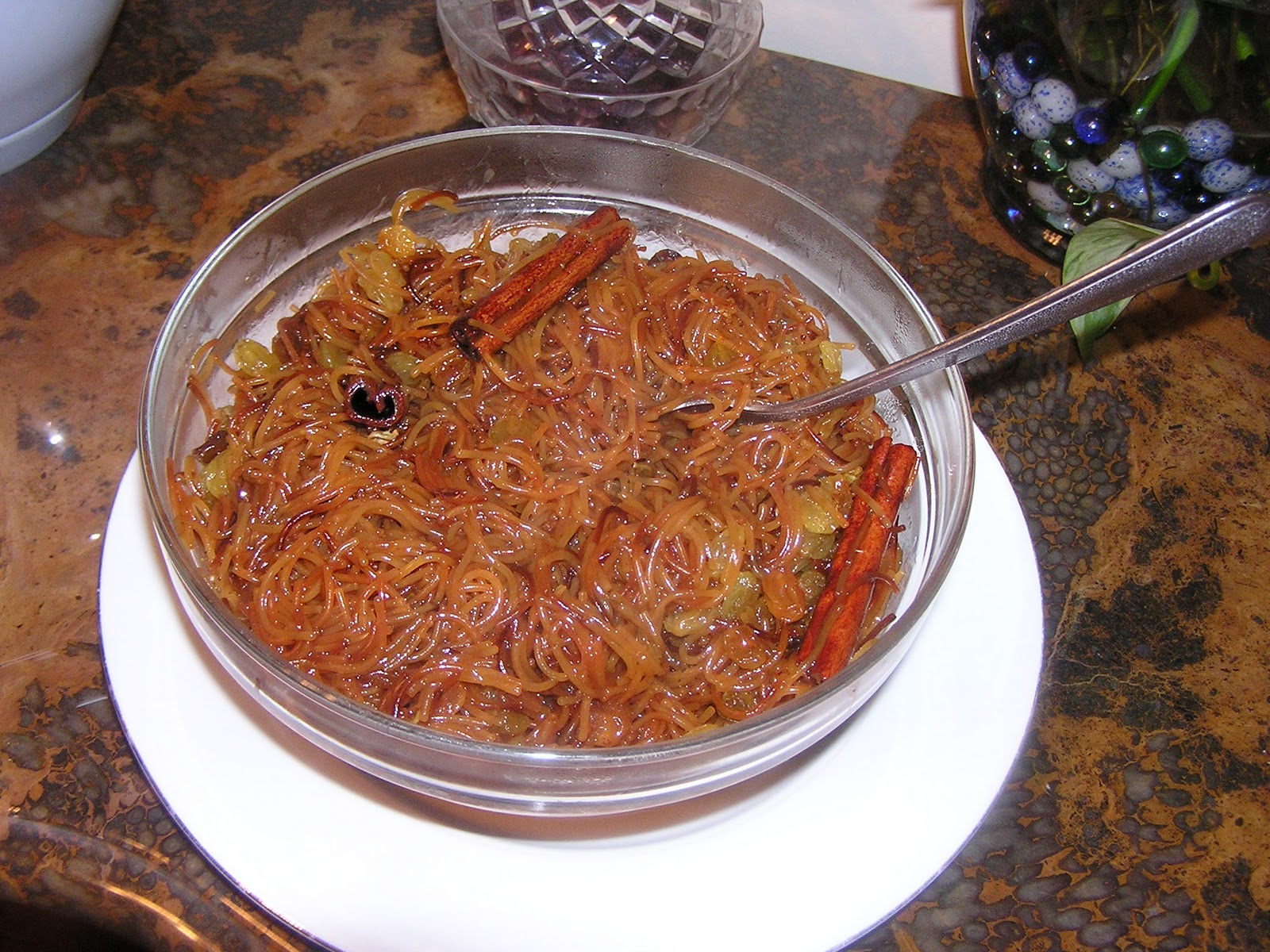
Cadriyad
This dessert is best served with rice. This dish is very popular in the Northern Somalia (Somaliland ) and is served during special occasions such as weddings.
½ stick unsalted butter
1 lb of angle hair pasta
2 cups hot water
1 cup sugar
1 – 2 cinnamon sticks
½ teaspoon cardamom powder
½ cup golden raisins
¼ cup almonds, toasted and coarsely chopped (optional)
Salt to taste
Heat a heavy skillet over medium heat and melt the butter and sauté the angle hair pasta until the pasta becomes light golden in color. Add the hot water, sugar, cinnamon and cardamom and cook until all the water is absorbed or evaporates. Add the raisins and almonds (if desired); remove from the heat.
Canbuulo iyo Bun

As explained in the Introduction, the anbuulo in the Somali Cuisine cookbook is one of those dishes in which the main ingredient is substituted for the indigenous one. The original main ingredient is made from corn or sorghum that undergoes much processing. The closest substitute is white hominy; fortunately hominy is as good as the original ingredient.
Canbuulo
1 cup of white hominy (dry, not canned)
½ cup of dry red chori beans or small red beans
7 cups of water
Salt to taste
Wash and clean the white hominy very well. Bring 4 cups of water to boil in a heavy pan. Add the clean white hominy and cook on a medium heat for 20 minutes. Drain all the water and wash the white hominy again, rubbing the white hominy between the palms of your hands to remove the starch.
Wash the kidney beans and mix them with the white hominy. Bring the remaining 3 cups of water to boil and add it to the mixture. Cook on a medium heat for about 40 minutes. After 40 minutes, if the canbuulo is not tender, add a little more water and cook until it is tender.
Bun
Bun is made of fried whole coffee beans and it is often used for spiritual purposes. In some Somali regions, Bun is often prepared on Wednesdays and Fridays, as it is believed that angels descend on those days. Bun is not a dish on its own and should be served with canbuulo or the canbuulo-family such as barley, beans or with popcorn.
1 cup clarified butter, olive oil or vegetable oil
1 handful of whole coffee beans
Wash the whole coffee beans very well. Using the tip of a fork or a knife, puncture little holes in the whole coffee bean (this prevents the beans from popping when frying).
Heat the butter or the oil in a heavy saucepan on a medium heat. Dry the whole coffee beans and add into the hot oil. Let them fry for 3-4 minutes, and then take out from the heat and transfer to another bowl (when frying, be careful with the hot oil and make sure you do not introduce water into the saucepan).
Best served with olive oil and honey (or sugar).
Monday, December 20, 2010


Subscribe to:
Posts (Atom)